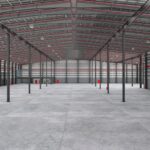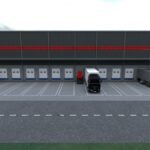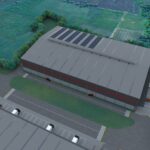

The choice between a built-to-suit warehouse India model and speculative warehousing depends on operational predictability, growth visibility and infrastructure requirements.
A BTS warehouse offers long-term efficiency through customised design and operational alignment, while speculative warehousing provides faster occupancy and greater short-term flexibility.
Businesses with stable, high-volume operations generally benefit more from BTS infrastructure, whereas companies prioritising speed-to-market or uncertain expansion cycles often prefer speculative facilities when evaluating industrial warehouse space for rent or warehouse for lease options.
India’s warehousing sector has undergone a significant transformation over the last decade.
What was once a fragmented market focused on cost and availability has become a strategic component of supply chain infrastructure.
The growth of e-commerce, organised manufacturing and third-party logistics has increased demand for industrial warehouse space for rent that functions as an operational hub rather than passive storage.
This shift has changed how occupiers evaluate warehouse for lease options across India’s major industrial corridors.
Earlier, businesses primarily focused on:
- Rental cost
- Immediate availability
- Land size
Today, occupiers are evaluating:
- Throughput efficiency
- Scalability
- Automation readiness
- Sustainability credentials
- Long-term operational fit
As a result, the decision between a built-to-suit warehouse India model and a speculative warehouse has become one of the most important infrastructure decisions a growing business can make.
What Is the Difference Between BTS and Speculative Warehousing?
The distinction between these two models is fundamental.
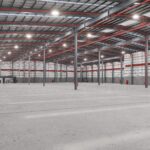
A speculative warehouse is developed before a tenant is identified. Developers construct the facility using standard Grade-A specifications designed to suit a broad range of occupiers.
These facilities are typically:
- Ready for immediate occupancy
- Standardised in layout and design
- Built for leasing flexibility
A built-to-suit warehouse India model works differently.
In BTS development, the warehouse is designed and constructed specifically around the occupier’s operational requirements. Layout planning, dock ratios, floor load capacity, utility infrastructure and automation readiness are all aligned with how the business actually operates.
Instead of adapting operations to fit the building, the building is designed around the operation.
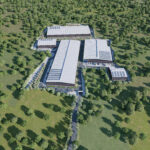
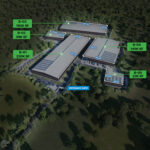
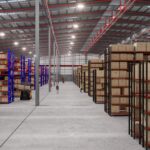
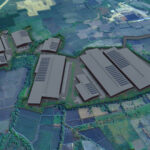
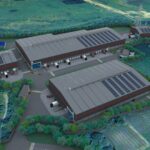
At OneAlpha Ventures, both Grade-A speculative warehousing and Built-to-Suit facilities are available within the Oragadam Industrial Park, giving occupiers the flexibility to choose based on operational strategy.
Why BTS Warehousing Has Gained Momentum in India
Demand for BTS warehouse infrastructure has increased significantly across India’s industrial corridors.
Modern supply chains have become more specialised and throughput-intensive. Sectors requiring customised infrastructure include:
- E-commerce fulfilment
- FMCG distribution
- Automotive supply chains
- Electronics manufacturing
- Third-party logistics
For example, a high-volume fulfilment centre may require:
- Higher dock ratios than standard speculative layouts
- Dedicated automation zones with specific floor specifications
- Greater electrical capacity for sortation systems
- Wider internal circulation aisles
- Mezzanine integration for multi-level picking
Retrofitting these requirements into a standard warehouse industrial space for rent increases both capital expenditure and long-term operational friction.
This is why many occupiers are evaluating BTS not as a premium option, but as a long-term operational investment.
The Biggest Advantage of Speculative Warehousing: Speed and Flexibility
Despite the growth of BTS infrastructure, speculative warehousing continues to dominate a large part of India’s warehouse for lease market.
The reason is speed.
Speculative facilities allow occupiers to:
- Start operations within weeks, not months
- Avoid long construction and approval timelines
- Reduce upfront commitment
This is especially important for:
- Rapidly scaling e-commerce businesses entering new markets
- Companies with uncertain demand projections
- Logistics providers onboarding new clients on short notice
Speculative warehousing also provides greater flexibility because:
- Lease structures are often shorter
- Expansion commitments are lower than BTS arrangements
For occupiers operating in dynamic or unpredictable markets, this flexibility can be more strategically valuable than infrastructure optimisation.
BTS Warehousing Prioritises Operational Efficiency Over Immediate Convenience
The logic behind BTS development is fundamentally different.
Rather than optimising for immediate occupancy, BTS infrastructure focuses on reducing operational inefficiencies across the entire lifecycle of the facility.
When a warehouse is purpose-built for a specific operation, every element is aligned with how that business actually runs:
- Internal movement and workflow design
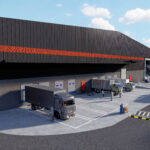
- Dock placement and truck turnaround
- Inventory flow and storage logic
- Automation integration from day one
- Utility infrastructure planned for growth
For large-scale occupiers, even small inefficiencies compound significantly over time.
A layout that adds a few extra seconds per order pick — scaled across thousands of daily transactions — translates into substantial throughput loss and labour cost over a year.
This is why mature occupiers evaluate warehouse infrastructure through lifecycle operational efficiency rather than rental cost alone.
Automation Is Accelerating the Shift Toward BTS Models
One of the strongest drivers of BTS warehouse demand is automation.
Modern warehouses are increasingly integrating:
- Robotics and autonomous mobile robots (AMRs)
- Conveyor and sortation systems
- Automated Storage and Retrieval Systems (AS/RS)
- AI-driven warehouse management systems
These systems require infrastructure compatibility from the design stage.
For example:
- Automation typically requires higher clear heights for vertical storage
- Floor slabs must support heavy robotic point loads
- Column spacing must accommodate robotic movement patterns
- Electrical infrastructure must handle continuous high-draw power
Many speculative facilities were not originally designed for these requirements.
As automation adoption increases — particularly in the Oragadam industrial park corridor — occupiers are increasingly turning to BTS and EPC solutions that integrate these requirements from day one.
Sustainability: A Growing Differentiator in Warehouse Selection
Sustainability has moved from a compliance consideration to a core selection criterion in warehouse evaluation.
For businesses with ESG commitments, operating from a facility that incorporates green infrastructure development and sustainable industrial solutions has become a meaningful differentiator.
BTS warehousing is well-positioned to integrate sustainable industrial development because environmental specifications can be built in from the start:
- Solar power and renewable energy integration
- Rainwater harvesting systems
- Energy-efficient insulation such as Rockwool
- Green building certifications like IGBC Platinum
- Low-carbon construction materials
The Oragadam Industrial & Logistics Park is IGBC Platinum-rated, incorporating green technology for a sustainable future across all infrastructure.
For occupiers with long-term sustainability targets, choosing a BTS or Grade-A speculative facility within a green-certified industrial park is both an operational and reputational investment.
Cost Comparison: Why Lower Rent Does Not Always Mean Lower Cost
At first glance, speculative warehousing usually appears more economical.
It avoids development timelines, customisation costs and long lease commitments.
However, businesses operating from generic facilities often accumulate additional costs through:
- Infrastructure retrofitting to accommodate operational needs
- Throughput inefficiency from suboptimal layouts
- Space underutilisation due to misaligned floor plates
- Increased labour movement and productivity losses
- Limitations on automation investment the structure cannot support
In contrast, a BTS warehouse may involve:
- Longer lease tenure
- Higher initial commitment
- A planning period of 12–18 months
But it can significantly reduce operational friction and deliver better economics over a five-to-ten-year lifecycle.
This is why large-scale occupiers evaluating industrial warehouse space for rent across India’s industrial corridors increasingly assess total lifecycle efficiency rather than upfront rental savings alone.
Which Model Fits Your Business?
| Factor | Speculative Warehouse | BTS Warehouse |
|---|---|---|
| Occupancy Speed | Immediate to 4 weeks | 12–18 month timeline |
| Operational Customisation | Limited – standard layouts | High – purpose-designed |
| Lease Flexibility | Shorter tenure | Longer commitment |
| Automation Readiness | Varies by facility | Integrated from design stage |
| Sustainability Features | Depends on developer | Built-in green infrastructure |
| Long-Term Efficiency | Moderate | Higher lifecycle ROI |
| Scalability | Restricted by design | Planned around growth |
Explore Warehousing Solutions with OneAlpha Ventures
At OneAlpha Ventures, developments are designed to support scalable, future-ready and sustainable logistics operations.
Rooted in the legacy of the Sree Kailas Group and 20+ years of industrial expertise, OneAlpha combines domain knowledge with forward-thinking infrastructure design.
The Oragadam Industrial & Logistics Park provides:
- Grade-A speculative warehousing for immediate lease
- Built-to-Suit facilities designed around your operation
- EPC-led development options for complete infrastructure control
- IGBC Platinum-rated sustainable industrial development
- 53 acres and 1.2 million sq ft within Tamil Nadu’s strongest industrial corridor
Businesses evaluating industrial warehouse space for rent, warehouse for lease or warehouse renting business models can assess facilities based on operational fit, automation readiness and long-term supply chain requirements.
FAQs
Q. What is a built-to-suit (BTS) warehouse?
A. BTS warehouse is designed and constructed specifically for a tenant’s operational requirements — including layout, dock ratios, floor specifications and automation readiness — before or during construction.
Q. What is speculative warehousing?
A. Speculative warehousing refers to standardised Grade-A warehouses developed before a tenant is identified, available for immediate lease across a broad range of occupiers.
Q. Which model is better for automation?
A. BTS warehouse is generally better suited for automation because infrastructure requirements — clear height, floor slab specs, column spacing, electrical capacity — can be built in from the design stage rather than retrofitted later.
Q. Is BTS warehousing more expensive than leasing a speculative warehouse?
A. On a headline rental basis, speculative warehousing often appears cheaper. However, BTS infrastructure typically delivers better lifecycle economics by eliminating operational inefficiencies, enabling automation and reducing retrofitting costs over time.
Q. Why is BTS warehousing growing in India?
A. Modern supply chains increasingly require customised, automation-ready and scalable infrastructure. As industrial corridors like Oragadam mature, more occupiers are choosing BTS to support long-term operational efficiency.
Q. What is warehousing as a service?
A. Warehousing as a service (WaaS) provides flexible, managed storage and logistics capacity on a usage or subscription basis — suited to businesses with variable demand or those not yet ready for a long-term warehousing space for rent commitment.
Q. What should I look for in a warehouse renting business in India?
A. Key factors include industrial park ecosystem quality, port and highway proximity, developer track record in industrial park development, sustainability certifications, scalability options and whether both speculative and BTS models are available within the same campus.