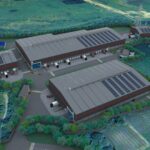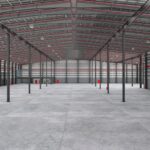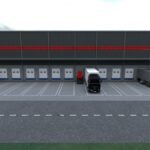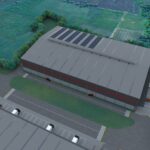

Turnkey warehouse development is a model where a single provider handles every stage of building a warehouse, from land and approvals through design, construction, and final handover, so the business receives a ready-to-operate facility. It removes the burden of coordinating multiple vendors and agencies, and it suits enterprises that want a finished building delivered on a fixed scope, timeline, and cost rather than managing the project themselves.
What is a turnkey warehouse?
A turnkey warehouse is a facility delivered complete and ready for operations by one accountable developer, so the client can effectively turn the key and begin work. The developer owns the entire chain, including land acquisition, statutory approvals, design, construction, and compliance, and hands over a building that is ready to use from day one.
This differs sharply from a self-managed build. In a conventional project, the business coordinates separate parties for land, architecture, approvals, civil work, and utilities, absorbing the risk when any one of them slips. In a turnkey model, that coordination sits with the developer, and the business deals with a single point of responsibility for the whole outcome.
The appeal for growing enterprises is focus. Building a warehouse is not their core business, yet a self-managed project pulls management time and capital into an unfamiliar, high-risk process. A turnkey approach lets the enterprise stay focused on its operations while an experienced developer carries the construction risk and delivers a finished asset.
How does turnkey warehouse development work?
Turnkey development runs as a managed sequence where the developer carries each stage, and understanding the flow shows exactly where the client’s risk is removed.
Land and approvals- The developer secures correctly zoned land and obtains the statutory clearances, including DTCP sanction and Environmental Clearance. On pre-approved land this stage is already complete, which is the single biggest saving in the entire timeline.
Design and build- The developer translates the client’s requirements into sanctioned plans and constructs the facility to Grade-A standards. A turnkey provider offering built to suit industrial space Sriperumbudur can tailor the design to the operation while still owning delivery end to end.
Handover- The client receives a compliant, operational building with approvals, utilities, and safety systems in place, ready for fit-out and immediate use.
What are the benefits of a turnkey warehouse?
The turnkey model concentrates its value in one place, which is accountability, and that single shift produces most of its advantages.
- Single accountability: One developer owns the entire outcome.
- Predictable cost: Fixed scope reduces budget overruns.
- Faster delivery: Integrated stages remove handoff delays.
- Lower risk: Construction and approval risk sit with the developer.
- Operational focus: Your team stays on core business.
Because a single provider manages every stage, a turnkey logistics park Oragadam Chennai can compress timelines that a multi-vendor project would stretch across months of coordination.
Why does a single provider reduce risk and cost?
A turnkey model lowers risk and cost because it removes the gaps between stages where conventional projects lose time and money.
In a self-managed build, every handoff between land, design, approvals, and construction is a point where responsibility blurs. When a delay or defect appears, parties point to each other, and the business absorbs the cost of resolving it. Accountability is spread so thin that no one truly owns the result.
A turnkey developer closes those gaps by owning all stages under one contract. There is no handoff to negotiate and no ambiguity about who is responsible, so problems are resolved internally rather than passed to the client. That integration is what converts into fixed pricing, firmer timelines, and a lower total risk over the life of the project.
Who should choose turnkey warehouse development?
Turnkey development suits enterprises that value a finished outcome over hands-on control of the build.
It is the right fit for businesses without in-house construction expertise, those working to a fixed operational deadline, and those that prefer predictable cost to managing a complex project. For these enterprises, the certainty of a delivered building outweighs the control of running the project themselves.
It is a weaker fit for businesses that want deep control over every construction decision, or those that already have the internal capability to manage vendors and approvals. And where speed matters most of all, some enterprises skip the build entirely and take a ready to occupy industrial park Oragadam, moving into completed Grade-A space in weeks rather than waiting for any construction at all.
FAQs
Q. What is a turnkey warehouse?
A. It is a warehouse delivered complete and ready to operate by a single developer who handles land, approvals, design, construction, and compliance, so the client receives a finished facility without coordinating multiple vendors.
Q. What is the difference between turnkey and built-to-suit warehousing?
A. Built-to-suit describes a facility customised to a tenant’s specifications. Turnkey describes the delivery model, where one provider owns every stage end to end. A warehouse can be both built-to-suit in design and turnkey in delivery.
Q. How long does turnkey warehouse development take?
A. On pre-approved land, a turnkey facility can be delivered in roughly 9 to 14 months. On unapproved land, add 12 to 18 months for land acquisition and statutory clearances such as DTCP sanction and Environmental Clearance.
Q. What are the main benefits of a turnkey warehouse?
A. Single accountability, predictable fixed cost, faster delivery through integrated stages, lower construction and approval risk, and the freedom for your team to stay focused on core operations rather than managing a build.
Q. Is turnkey warehouse development more expensive?
A. Not usually. Fixed scope and single-provider accountability tend to reduce budget overruns and coordination costs, so total delivered cost is often more predictable and competitive than a self-managed multi-vendor build.
Q. Who should choose turnkey development?
A. Enterprises without in-house construction expertise, those working to fixed deadlines, and those that value predictable cost and a finished building over hands-on control of the construction process.