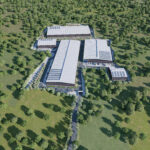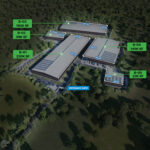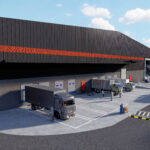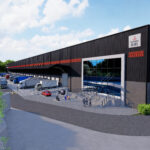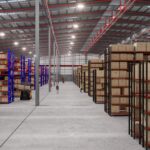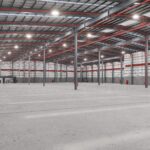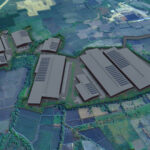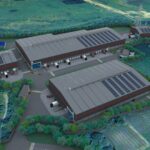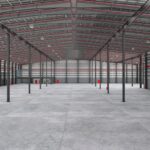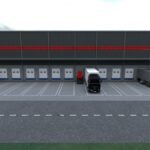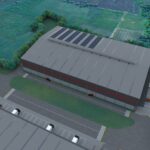

An EPC warehouse model is most effective when businesses require specialised infrastructure, long-term operational efficiency and tighter control over project execution.
Unlike a standard warehouse for lease arrangement, EPC industrial construction integrates engineering, procurement and construction into a single framework — allowing occupiers to develop warehousing solutions aligned with automation, sustainability and operational requirements.
For manufacturers and large logistics operators evaluating industrial warehouse space for rent, EPC-led development often delivers better lifecycle efficiency than adapting generic speculative facilities after occupancy.
Warehousing in India is no longer viewed only as a leasing activity.
Over the past decade, industrial occupiers have started treating warehouses as operational infrastructure that directly affects:
- Throughput efficiency
- Supply chain reliability
- Automation integration
- Long-term scalability
- Sustainable industrial development goals
This shift has changed how businesses approach procurement of industrial warehouse space for rent.
Earlier, companies primarily evaluated:
- Rental rates
- Immediate availability
- Warehouse size
Today, occupiers increasingly focus on:
- Infrastructure compatibility with planned operations
- Future expansion capability
- Utility and power planning
- Operational flow alignment
- Sustainability credentials
As a result, many large occupiers are moving beyond standard warehouse for lease models and evaluating EPC warehouse development as a more strategic alternative.
What Does EPC Warehousing Actually Mean?
EPC stands for Engineering, Procurement and Construction.
In an EPC warehouse model, a single integrated framework manages:
- Facility design and engineering
- Material and equipment procurement
- Infrastructure planning
- Construction execution and commissioning
Rather than treating these stages as separate activities managed by different parties, EPC industrial construction combines them into one coordinated delivery process.
This creates greater alignment between:
- The occupier’s warehousing solutions requirements
- The physical infrastructure being delivered
- Project execution timelines and budgets
For occupiers, the key difference is control.
Rather than leasing a pre-built facility and adapting operations around it, businesses can develop infrastructure tailored to their exact requirements.
OneAlpha Ventures offers comprehensive EPC solutions as part of its industrial solutions portfolio, covering land acquisition, engineering design, procurement and full construction delivery.
Why Standard Warehouse Leasing Has Limitations
Standard leasing models work effectively for many occupiers — particularly businesses prioritising speed and flexibility.
However, as operations grow in scale and specialisation, limitations of generic speculative facilities begin to emerge.
Many pre-built warehouses were designed for the broadest range of occupiers, which means they are optimised for none of them.
Over time, occupiers leasing standard warehouse industrial space for rent frequently encounter:
- Inadequate dock ratios causing truck queuing and delays
- Insufficient electrical infrastructure for automation or refrigeration
- Poor column spacing restricting racking and robotic movement
- Space utilisation inefficiencies from misaligned floor plates
- Restricted expansion flexibility due to fixed building dimensions
These issues may not appear critical at initial occupancy.
But they compound significantly over long operating cycles — adding unnecessary costs, reducing throughput and limiting automation investment over time.
EPC Development Prioritises Operational Design from Day One
The strongest advantage of EPC warehousing is that operational planning happens before construction begins, not after occupancy.
In a standard warehouse for lease model, businesses modify existing infrastructure after moving in — always more expensive and disruptive than building to specification from the start.
In EPC industrial construction, every element of the facility is designed around actual operational requirements:
- Workflow Design — Internal movement paths and storage logic mapped before build
- Dock Planning — Dock ratios, door placement and truck circulation planned for actual throughput volumes
- Automation Integration — Robotics zones, AS/RS infrastructure and power requirements built in from day one
- Utility Infrastructure — Electrical, water and HVAC systems sized for operational needs, not generic averages
- Scalability — Structural and spatial design accommodates planned future growth
For example, cross-docking capability or a goods-to-person picking system retrofitted into a speculative warehouse typically costs two to three times more than building it in during initial construction.
EPC execution resolves these operational needs during the engineering stage — resulting in a facility that is ready from day one.
Automation Is Increasing Demand for EPC Warehousing
Automation is becoming one of the biggest drivers of EPC warehouse demand in India.
Modern logistics facilities are increasingly integrating:
- Robotics and autonomous mobile robots (AMRs)
- Conveyor and sortation systems
- Automated Storage and Retrieval Systems (AS/RS)
- AI-driven warehouse management systems
These technologies require infrastructure compatibility from the start.
For example:
- AS/RS systems require clear heights of 10–14 metres or more
- Floor slabs must support concentrated robotic point loads
- Column spacing must accommodate automated racking aisle dimensions
- Electrical systems must handle continuous high-draw power
Many existing speculative facilities were not designed around these requirements.
As automation adoption accelerates among e-commerce, FMCG and logistics operators in established industrial hubs like the Oragadam industrial park , EPC-led infrastructure is increasingly the preferred model for occupiers planning automation-intensive operations.
Sustainable Industrial Development Through EPC
EPC warehousing is uniquely positioned to deliver sustainable industrial solutions because environmental and energy systems can be engineered in from the design stage.
This is significantly more cost-effective than retrofitting sustainability features into an existing speculative facility.
Green technology for a sustainable future — including the following — can all be integrated into the EPC design brief:
- Solar power generation and renewable energy systems
- Rainwater harvesting and water conservation
- Rockwool insulation for thermal efficiency
- Energy-efficient LED lighting
- Green building materials and low-carbon construction practices
Sustainable infrastructure development is a core pillar of OneAlpha Ventures’ approach to industrial park development.
The Oragadam Industrial & Logistics Park has achieved IGBC Platinum certification, incorporating:
- Renewable energy integration
- Low-carbon construction
- Eco-friendly waste management systems
For occupiers with ESG mandates, choosing an EPC facility within a sustainably certified industrial ecosystem delivers both operational and reputational value.
EPC Models Improve Project Coordination and Execution Efficiency
Industrial projects often face delays because engineering, procurement and construction are managed separately by different teams and contractors.
This fragmentation creates:
- Timeline slippages
- Material procurement delays
- Design-to-construction misalignments
- Unclear accountability when problems arise
An EPC structure eliminates this fragmentation by creating a unified execution framework with a single point of accountability across all stages.
For occupiers, this means:
- Timeline Predictability — Procurement aligned with construction scheduling from the outset
- Budget Visibility — Engineering, material and construction costs assessed holistically
- Infrastructure Consistency — Same team governs design intent and execution
- Clear Accountability — One contractor owns the outcome, not multiple parties
In sectors with tight operational timelines — where a delayed warehouse opening affects revenue or client commitments — this level of coordination is critically valuable.
Cost Comparison: EPC vs Standard Leasing
At first glance, leasing a pre-built warehouse appears more economical because it avoids development timelines and planning complexity.
However, this comparison overlooks lifecycle operational cost.
Businesses adapting generic warehouse industrial space for rent may eventually incur costs through:
- Facility modifications and retrofits
- Operational inefficiencies from suboptimal layouts
- Utility upgrades for power-intensive systems
- Automation retrofitting at multiples of new-build cost
- Ongoing space underutilisation
EPC warehousing generally involves:
- Higher upfront planning requirements
- A project execution timeline of 12–24 months
- Greater initial commitment
But for high-volume occupiers, the lifecycle efficiency gains — reduced labour cost, lower retrofitting expense, higher automation ROI and improved throughput — consistently outweigh the initial cost differences.
When Does EPC Make Sense?
EPC warehousing is not the right model for every occupier.
The decision depends on operational complexity, long-term scale and whether standard speculative warehousing solutions can adequately serve the business’s requirements.
| Factor | Standard Lease | EPC Warehouse |
|---|---|---|
| Occupancy Speed | Immediate to 4 weeks | 12–24 month delivery |
| Operational Customisation | Limited | Comprehensive |
| Automation Readiness | Varies by facility | Integrated from design |
| Sustainability Integration | Depends on developer | Engineered-in green infrastructure |
| Infrastructure Control | Moderate | Complete |
| Scalability | Restricted by design | Planned around growth |
| Lifecycle Efficiency | Moderate | Higher |
Standard leasing works well for businesses prioritising rapid occupancy and flexibility.
EPC development becomes more valuable when operations involve:
- High throughput and volume requirements
- Automation integration from launch
- Long-term infrastructure planning horizons
- Specialised utility or structural requirements
- Large-scale distribution or manufacturing systems
Explore EPC Industrial Infrastructure with OneAlpha Ventures
At OneAlpha Ventures, industrial developments are planned and executed around operational efficiency, scalability and future-ready infrastructure.
Rooted in the Sree Kailas Group’s 20+ years of industrial heritage, OneAlpha brings expertise in sustainable industrial development and EPC-led warehousing to every project.
The Oragadam Industrial & Logistics Park supports:
- Grade-A warehousing for lease
- Built-to-Suit facilities
- EPC-led industrial construction
- IGBC Platinum-rated sustainable infrastructure
- 53 acres and 1.2 million sq ft within Tamil Nadu’s established industrial corridor
Businesses evaluating industrial space for rent, warehouse for lease or advanced warehousing solutions can connect with the team to explore tailored opportunities.
FAQs
Q. What is an EPC warehouse?
A. An EPC warehouse is developed through an integrated Engineering, Procurement and Construction framework where infrastructure is designed and built around operational, automation and sustainability requirements — unlike a standard warehouse for lease developed before a tenant is identified.
Q. How is EPC different from standard warehouse leasing?
A. Standard leasing means occupying a pre-built speculative facility. EPC gives the occupier complete control over facility design from the start, enabling automation systems, green technology and operational flow to be built in rather than retrofitted.
Q. What is EPC industrial construction?
A. EPC industrial construction delivers facilities — warehouses, logistics parks, manufacturing units — through a unified Engineering, Procurement and Construction framework managed by a single developer across all three stages.
Q. Why is EPC warehousing growing in India?
A. Because modern supply chains require automation-ready, scalable and operationally customised infrastructure. EPC delivers purpose-built facilities with better lifecycle efficiency than adapted speculative facilities.
Q. Who benefits most from EPC warehousing?
A. Large manufacturers, logistics operators, e-commerce companies and automotive supply chain businesses with long-term operational visibility, automation requirements and sustainability commitments.
Q. Can EPC warehousing incorporate sustainable industrial solutions?
A. Yes. EPC is particularly suited to sustainable industrial development because green technology — solar power, rainwater harvesting, energy-efficient insulation, IGBC certification — can be engineered in from the design stage rather than retrofitted.
Q. What is the typical timeline for an EPC warehouse project?
A. Depending on size and complexity, EPC warehouse projects typically take 12–24 months from design commencement to handover — covering engineering, regulatory approvals, procurement and construction under a single unified framework.