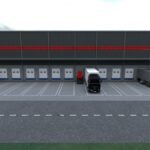

To operate a warehouse legally in Tamil Nadu, you need land that is correctly classified for industrial use, a DTCP or DTCP-equivalent planning approval, Environmental Clearance (where applicable), building plan sanction, a fire NoC, a factory or shops-and-establishments registration, and pollution-control consent from the Tamil Nadu Pollution Control Board (TNPCB). Securing these independently takes 12 to 18 months — which is why most occupiers in the Oragadam–Sriperumbudur corridor now prefer pre-approved, ready-to-occupy parks where the regulatory groundwork is already complete.
If you are leasing, building, or buying warehouse space anywhere in Tamil Nadu, compliance is not a formality you handle after signing — it is the single biggest variable that decides whether you are operational in three months or stuck in clearances for two years. This guide breaks down exactly what is required, in the order it matters, and why your choice of location and developer determines most of the outcome.
What approvals do you legally need to run a warehouse in Tamil Nadu?
A compliant warehouse in Tamil Nadu rests on six core clearances. Miss any one and you risk sealing notices, penalties, or an inability to get power and occupancy.
- Correct land classification. The plot must be designated for industrial or warehousing use under the local master plan. Agricultural or residential land requires conversion, which is slow and frequently rejected. This is the first thing to verify — before price, before size.
- Planning approval (DTCP / CMDA / SIPCOT). Outside Chennai’s metropolitan limits, layout and building approvals come from the Directorate of Town and Country Planning (DTCP). Inside the Chennai Metropolitan Area, the CMDA governs; inside notified industrial estates, SIPCOT does. For the Oragadam–Sriperumbudur belt, DTCP approval is the document that matters most.
- Environmental Clearance (EC). Larger built-up projects and specific industry categories require EC under the Environment Impact Assessment framework. This is one of the longest lead-time items, often the bottleneck that delays a project by a year or more.
- Building plan sanction. The structure itself — floor loading, height, setbacks, dock configuration — must be sanctioned against the approved layout.
- Fire NoC and TNPCB consent. A No Objection Certificate from the Tamil Nadu Fire and Rescue Services, plus Consent to Establish and Consent to Operate from the Tamil Nadu Pollution Control Board, are mandatory before you can lawfully run operations.
- Operational registration. Depending on activity and headcount, you register under the Factories Act or the Tamil Nadu Shops and Establishments Act, and obtain GST registration for the premises.
Key takeaway: The compliance stack is sequential. Land classification gates planning approval, which gates building sanction, which gates fire and pollution consent. A gap early in the chain stalls everything downstream.
Why does compliance take 12–18 months and how do you avoid it?
The timeline problem is structural, not bureaucratic bad luck. Each clearance depends on the one before it, and several are issued by different authorities with their own queues. Environmental Clearance and DTCP layout approval routinely consume the bulk of that window. For a business trying to hit a production deadline or a peak-season fulfilment target, an 18-month approval cycle can make the entire project unviable.
The way occupiers eliminate this is by choosing land where the approvals already exist. When a developer has completed land procurement and secured DTCP sanction and EC ahead of you, the 12-to-18-month clearance phase effectively drops to zero. You inherit a compliant asset instead of building compliance from scratch.
This is precisely the advantage of a pre-cleared Oragadam industrial space with approvals — the land is secured, DTCP approval is in hand, and Environmental Clearance has been obtained, so a tenant moves straight to fit-out and operations rather than spending the first year of a lease chasing paperwork.
Is the Oragadam–Sriperumbudur corridor a good location for a compliant warehouse?
Yes — and not only for compliance reasons. The Oragadam–Sriperumbudur belt near Chennai is South Asia’s largest automotive cluster and one of India’s fastest-growing Grade-A warehousing markets, home to more than 22 Fortune 500 facilities including Renault-Nissan, Daimler, Hyundai, Samsung, Foxconn, and Saint-Gobain.
For compliance specifically, the corridor matters because it is an established industrial ecosystem with a mature regulatory pathway. Authorities here process industrial approvals routinely, the land is already zoned for industry, and infrastructure — power, water, NH-4 and NH-48 connectivity — is in place. That maturity is what makes a ready to occupy industrial park Oragadam genuinely deliverable rather than aspirational. The location is roughly 55 km from Chennai’s centre, about 60–75 minutes from Chennai International Airport, and well-connected to both Chennai and Ennore Ports.
Does compliance differ for built-to-suit versus ready-to-move warehouses?
It does, and understanding the difference protects you from hidden delays.
A ready-to-move warehouse already carries its planning approval, building sanction, fire NoC, and structural compliance. Your responsibility narrows to operational registrations — Factories Act or Shops and Establishments, GST, and TNPCB Consent to Operate for your specific activity. This is the fastest path to going live.
A built-to-suit (BTS) facility is constructed to your specifications, which means the building plan sanction and fire approval are tied to your design. The critical question is whether the underlying land approvals already exist. When a developer offers a built a suit warehouse Oragadam on land that is already DTCP-approved and environmentally cleared, the BTS process runs from design lock to handover in roughly 9–14 months — because only the building-specific approvals remain, not the land-level ones. On unapproved land, that same BTS project would first need the full 12-to-18-month clearance cycle on top of construction.
Key takeaway: With BTS, the deciding factor is not the building — it is whether the land beneath it is already cleared. Always confirm land-level approvals before committing to a custom build.
What compliance documents should you verify before signing a lease?
Before you sign anything, ask the developer or landlord for these and verify them independently:
- DTCP / CMDA / SIPCOT approval letter for the layout, matching the exact survey numbers
- Environmental Clearance certificate, where the project scale requires it
- Approved building plan with sanctioned floor loading and dock specifications
- Fire NoC from Tamil Nadu Fire and Rescue Services
- TNPCB Consent to Establish / Operate relevant to permitted activities
- Patta / land title and classification confirming industrial use
- Encumbrance certificate confirming the land is free of legal claims
A credible developer produces these on request without hesitation. Reluctance or vague answers on any single document is the clearest red flag in the entire process.
FAQs
Q. Do I need Environmental Clearance for every warehouse in Tamil Nadu?
A. No. Environmental Clearance is triggered by built-up area thresholds and specific industry categories. Smaller storage facilities may not require it, but larger Grade-A warehouses and manufacturing-linked units typically do. Always confirm against your project’s scale and activity before assuming you are exempt.
Q. Who issues warehouse planning approvals in the Oragadam region?
A. The Directorate of Town and Country Planning (DTCP) is the primary authority for layout and building approvals in the Oragadam–Sriperumbudur corridor, since it falls outside the Chennai Metropolitan Area governed by CMDA.
Q. How long does it take to make a warehouse fully compliant in Tamil Nadu?
A. Building compliance from raw, unapproved land typically takes 12 to 18 months across all clearances. On pre-approved land where DTCP sanction and EC already exist, a ready-to-move unit can be operational within weeks, and a built-to-suit facility within 9 to 14 months.
Q. What is the biggest compliance risk when leasing a warehouse?
A. Incorrect or unconfirmed land classification. If the underlying land is not legally designated for industrial use, no amount of building work makes the warehouse compliant, and the issue can surface as a sealing or penalty long after you have moved in.
Q. Can I start operations while approvals are still pending?
A. No. Operating without the required fire NoC, pollution-control consent, and occupancy approval exposes you to penalties and closure orders. This is exactly why occupiers increasingly choose parks where the regulatory groundwork is already complete.