
The choice between FTWZ India infrastructure and domestic warehousing depends on supply chain structure, import-export exposure and inventory movement strategy.
A free trade warehousing zone can significantly reduce customs and GST-related inefficiencies for businesses involved in international trade, deferred inventory movement and regional distribution.
Domestic warehousing, however, often remains the more practical warehousing solution for businesses focused primarily on internal distribution and faster domestic fulfilment.
The right model depends on how inventory flows through the supply chain — not just where it is stored — and whether the chosen warehousing space for rent aligns with broader trade and working capital strategy.
Warehousing has always been an operational decision.
But for businesses involved in imports, exports and cross-border distribution, it has also become a critical tax and trade strategy decision.
The type of facility, its regulatory designation and its location relative to ports and consumption markets can directly affect:
- Working capital efficiency
- Customs duty exposure
- GST flow management
- Inventory holding cost
- Supply chain flexibility
This is one of the primary reasons specialised models such as FTWZ India have grown in prominence alongside the more traditional domestic warehouse for lease model.
As global supply chains become more integrated, businesses are increasingly evaluating whether standard domestic warehousing solutions are the most efficient structure for cross-border trade operations.
What Is an FTWZ and Why Was It Introduced?
A free trade warehousing zone (FTWZ) is a specially designated logistics and warehousing ecosystem established under India’s Special Economic Zones Act.
FTWZs were created to improve India’s position within global supply chains by allowing businesses to:
- Store imported goods without immediate customs duty payment
- Re-export inventory without triggering full domestic duty implications
- Consolidate international cargo from multiple origins
- Perform value-added activities such as repackaging and relabelling
- Support regional distribution models across multiple markets from a single inventory position
The core advantage is cash flow.
Instead of clearing goods immediately into the domestic market, companies can defer customs obligations until inventory is actually required for Indian consumption.
For businesses managing large import volumes or high-value inventory, this fundamentally changes working capital dynamics.
Domestic Warehousing Remains the Backbone of Internal Distribution
Despite the advantages of FTWZ infrastructure, domestic warehousing continues to dominate India’s warehouse for lease market.
The reason is straightforward.
Most warehousing demand in India is driven by:
- Domestic consumption and distribution
- E-commerce fulfilment networks
- Manufacturing supply chains serving the Indian market
- FMCG movement within India
For these operations, what matters most is:
- Proximity to consumption centres and industrial corridors
- Access to reliable highway networks
- Operational simplicity without customs-linked processes
- Faster throughput and reduced compliance overhead
For businesses focused almost entirely on internal distribution — whether an FMCG company, an e-commerce operator or a domestic manufacturer — industrial warehouse space for rent within a well-connected domestic industrial park almost always represents the more practical warehousing solution.
The Biggest Advantage of FTWZ: Duty Deferment and Working Capital Efficiency
The most powerful financial advantage of an FTWZ India structure is deferred customs liability.
Under conventional import models, customs duties are payable when goods enter the domestic market — creating an immediate cash outflow before goods are sold or deployed.
In an FTWZ structure, this duty payment is deferred until inventory is actually cleared for Indian domestic consumption.
For businesses importing high-value goods, this creates significant working capital advantages:
- Duties are only paid when inventory is genuinely needed in the domestic market
- Capital that would otherwise be tied up in duty payments can be deployed elsewhere
- Large import cycles become significantly more cash-flow efficient
For example, a business importing electronics worth ₹1 crore at a 20% duty rate defers ₹20 lakhs per container under an FTWZ model — a material advantage that scales with import volume.
GST and Supply Chain Structuring
GST has simplified many aspects of India’s domestic warehousing structure by eliminating the tax-driven state-by-state warehouse multiplication of the pre-GST era.
However, for businesses with significant international trade exposure, supply chain structure continues to have important implications for:
- GST flow and input credit management
- Inventory positioning flexibility
- Customs treatment across markets
Domestic warehousing provides efficient GST treatment for:
- Intra-India distribution
- Regional fulfilment from strategically located warehousing space for rent
- Manufacturing-linked inventory movement
But businesses involved in international sourcing, multi-country redistribution or export-oriented supply chains often require more flexibility — and this is precisely where free trade warehousing zone infrastructure delivers strategic value.
FTWZ structures can support:
- Consolidation of imported inventory from multiple origins
- Repackaging and value-added services
- Redistribution to multiple domestic or international markets
- Re-export operations without triggering full domestic duty exposure
When Domestic Warehousing Is the Stronger Operational Choice
FTWZ infrastructure is not automatically the better model — and for many occupiers, it introduces unnecessary complexity.
Businesses focused on the following will typically find domestic warehousing provides stronger operational efficiency:
- Last-mile distribution to Indian consumers
- High-frequency e-commerce fulfilment with rapid inventory turnover
- FMCG dispatch cycles requiring fast warehouse-to-retail movement
- Domestic manufacturing supply chains with purely intra-India material flows
The reason is operational simplicity.
Domestic industrial warehouse space for rent allows inventory to enter the local supply chain directly and immediately, without the additional administrative and compliance processes associated with FTWZ operations.
In high-frequency dispatch environments — where a 3PL may process hundreds of thousands of orders daily — speed and simplicity matter far more than customs optimisation.
FTWZ Models Work Best for Regional Distribution Strategy
FTWZ infrastructure delivers its greatest strategic value when businesses use India as a regional inventory hub rather than purely a domestic consumption market.
This model is increasingly relevant for:
- Electronics supply chains managing global component distribution
- Automotive component businesses serving multiple manufacturing markets
- Industrial equipment distributors operating across South and Southeast Asia
- High-value consumer goods companies optimising inventory across multiple countries
Companies importing goods from East Asia and redistributing across South Asia or the Middle East can use FTWZ facilities to:
- Position inventory for multiple destinations simultaneously
- Clear goods into specific markets only when required
- Maintain flexibility around which markets receive inventory
- Avoid unnecessary customs crystallisation on goods that may be re-exported
In these sectors, inventory flexibility and working capital efficiency can directly and materially affect competitive positioning.
Infrastructure and Connectivity Matter in Both Models
Regardless of whether a business chooses FTWZ or domestic warehousing, infrastructure quality and logistics connectivity remain foundational to operational performance.
The efficiency of either model depends heavily on:
- Proximity to port infrastructure for import-export businesses
- Access to national and state highway networks for domestic distribution
- The quality of industrial park development within which the facility sits
- The surrounding ecosystem of transportation, labour and logistics services
This is why established industrial ecosystems like the Oragadam industrial park and Oragadam logistic park — with access to Chennai Port, Ennore Port and Kattupalli Port, and highway connections via NH-4, SH-48 and SH-57 — deliver strong performance for both domestic distribution and international trade operations.
Strong logistics connectivity often determines how efficiently either warehousing model performs in practice.
Which Model Fits Your Business?
| Factor | Domestic Warehousing | FTWZ India Model |
|---|---|---|
| Primary Focus | Domestic distribution | International trade and redistribution |
| Customs Duty Flexibility | Limited | High – Duty deferment available |
| Working Capital Optimisation | Moderate | Stronger for import-heavy operations |
| Operational Simplicity | Higher | More compliance-intensive |
| Last-Mile Speed | Strong | Moderate |
| Regional Distribution | Limited | Strong – Multi-market capability |
| GST Efficiency | Optimal for intra-India operations | Flexible for cross-border trade flows |
- Large import cycles
- Re-export operations
- Multi-country inventory flows
- High-value international supply chains
Explore Industrial Infrastructure with OneAlpha Ventures
At OneAlpha Ventures, industrial developments are planned around operational scalability, connectivity and long-term supply chain efficiency.
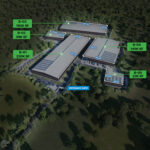
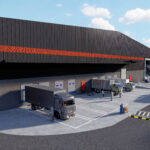
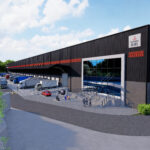
The Oragadam Industrial & Logistics Park provides industrial warehouse space for rent within one of Tamil Nadu’s most strategically connected logistics ecosystems, offering:
- Multi-port connectivity to Chennai, Ennore and Kattupalli ports
- Access to NH-4, SH-48 and SH-57 highway networks
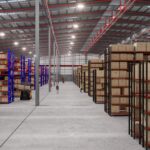
- Grade-A warehousing solutions for domestic and international operations
- Sustainable industrial development with IGBC Platinum certification
- Scalable infrastructure for long-term supply chain growth
Businesses evaluating warehouse for lease, warehousing space for rent or advanced warehouse logistics solutions can connect with the team to explore tailored opportunities.
FAQs
Q. What is an FTWZ in India?
A. An FTWZ, or free trade warehousing zone, is a designated logistics zone under India’s SEZ Act that allows imported goods to be stored with deferred customs duties until cleared for domestic consumption.
Q. Who benefits most from FTWZ infrastructure?
A. Businesses involved in high-volume imports, re-export operations and regional multi-country distribution — particularly in electronics, automotive, industrial equipment and high-value consumer goods sectors.
Q. Is domestic warehousing better for e-commerce and FMCG businesses?
A. In most cases, yes. Domestic industrial warehouse space for rent within well-connected logistics parks provides faster, simpler and more cost-effective distribution for businesses focused on India’s domestic market.
Does FTWZ reduce GST liability? FTWZ structures can improve inventory and customs efficiency, but specific GST implications depend on how inventory moves through the supply chain. Consulting a tax professional is advisable for your specific business model.
Q. What is the difference between a warehouse for lease and FTWZ space?
A standard warehouse for lease sits in the domestic tariff area with normal customs and GST treatment. FTWZ space operates in a designated zone with duty deferment provisions — suited to businesses with significant import-export activity.
Q. Can a business use both FTWZ and domestic warehousing simultaneously?
A. Yes. Many large businesses operate a hybrid model — using FTWZ infrastructure for deferred domestic clearance or international redistribution, while using domestic warehousing space for rent for high-frequency local fulfilment.
Q. How does warehousing as a service differ from FTWZ and domestic leasing?
A. Warehousing as a service (WaaS) provides flexible, managed logistics capacity on a usage or subscription basis — ideal for businesses not yet ready for a long-term warehouse for lease commitment. Both domestic and FTWZ warehousing solutions can be accessed through WaaS depending on the operator.