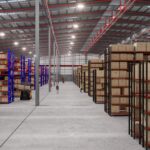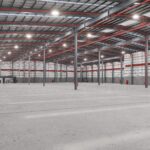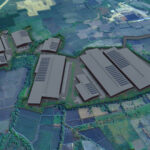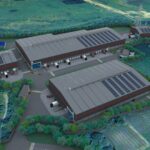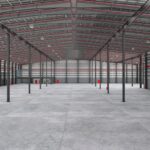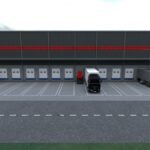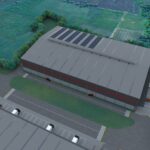

Modern warehousing solutions are the range of facility options a business uses to store, handle, and distribute goods as it scales, including ready-to-move Grade-A warehouses, built-to-suit facilities, shared and multi-client spaces, and saleable industrial land. The right solution depends on your growth stage, how specialised your operations are, and how fast you need to be running. For most growing enterprises, the decision is less about the building itself and more about matching the solution to where the business is heading.
What are modern warehousing solutions?
Modern warehousing solutions are purpose-built facility models designed to match how a business actually operates, rather than the bare storage sheds that once defined the category. Today the term covers everything from Grade-A speculative warehouses to fully customised builds, shared multi-client spaces, and industrial land for enterprises that want to own their footprint.
What separates a modern solution from a traditional warehouse is design intent. A modern facility is engineered around throughput, safety, and efficiency, with specifications like floor load capacity, clear height, dock configuration, and power redundancy planned for the operation it serves. Location, approvals, and connectivity are treated as part of the solution, not afterthoughts.
For a growing enterprise, this shift matters because warehousing is no longer a fixed cost to minimise. It is a lever for speed and margin. A facility that fits the operation reduces handling time, supports automation, and scales with demand, which is why enterprises now choose warehousing by solution type rather than by square footage alone.
Which warehousing solution fits your business?
The main warehousing models each solve a different problem, and knowing what each does best is the fastest way to narrow your options.
Ready-to-move warehouses
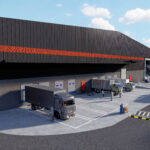
Ready-to-move Grade-A warehouses are speculative facilities built to modern standards and available for immediate occupancy. They suit enterprises that need standard, high-quality space quickly without waiting on construction.
- Fast occupancy: Move in within weeks, not years.
- Proven specs: Grade-A floor loading, height, and docks.
- Lower risk: You inspect the finished building before committing.
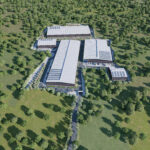
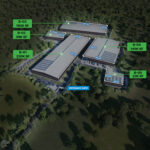
A ready-to-move logistics park Oragadam Chennai gives a scaling business modern space inside an established industrial corridor without the lead time of a custom build.
Built-to-suit facilities
Built-to-suit facilities are constructed to a single tenant’s exact specifications. They suit enterprises with specialised requirements and long occupancy horizons that standard buildings cannot meet.
- Full customisation: Design matches your exact workflow.
- Long term: Best over 9 to 15 year leases.
- Future ready: Built to absorb automation and growth.
Saleable industrial land
Industrial land parcels suit enterprises that want to own and develop their own facility. They offer maximum control over design and long-term asset value, at the cost of the longest setup timeline.
- Full ownership: Complete control of the asset.
- Custom build: Design without tenant constraints.
- Long horizon: Suited to permanent operations.
How do you match a solution to your growth stage?
Warehousing needs change as an enterprise scales, so the right solution at one stage is often the wrong one at another.
Early-stage and fast-scaling businesses usually prioritise speed and flexibility. At this stage, a ready-to-move warehouse or shared space lets the business expand without locking capital into a long build. The priority is being operational quickly and keeping the option to move as demand shifts.
Established enterprises with predictable, specialised operations gain more from a built-to-suit facility. Once volumes are stable and requirements are clear, a custom facility optimised for the workflow starts paying back through efficiency, and a long lease becomes an asset rather than a risk.
Enterprises planning permanent regional operations often move toward owning industrial land. When a location is central to long-term strategy, ownership offers control and asset value that leasing cannot. The trade-off is the longest timeline and the largest upfront commitment.
Why does location decide a warehousing solution's value?
A warehousing solution is only as strong as where it sits, because location determines freight cost, workforce access, and how fast you can be operational.
The best facility in a poorly connected location still forces higher transport costs on every shipment. A well-placed one plugs into highways, ports, and airports, and sits inside an existing industrial ecosystem with a trained workforce and established suppliers. This is why enterprises weigh the corridor as heavily as the building.
Approval status is part of location value too. Space on pre-approved land removes the 12 to 18 month clearance cycle that raw land carries, which is why demand for industrial space for rent in Oragadam stays high among enterprises that need to move fast inside a proven manufacturing corridor.
FAQs
Q. What are modern warehousing solutions?
A. They are purpose-built facility models designed around how a business operates, including ready-to-move Grade-A warehouses, built-to-suit facilities, shared multi-client spaces, and saleable industrial land, rather than basic storage sheds.
Q. What is the difference between ready-to-move and built-to-suit warehousing?
A. Ready-to-move warehouses are completed Grade-A buildings available for immediate occupancy and standard needs. Built-to-suit facilities are constructed to a tenant’s exact specifications for specialised, long-term operations, and take longer to deliver.
Q. Which warehousing solution is best for a growing business?
It depends on growth stage. Fast-scaling businesses favour ready-to-move space for speed and flexibility, established enterprises with specialised needs favour built-to-suit, and businesses planning permanent operations often choose to own industrial land.
Q. How does location affect a warehousing solution?
A. Location determines freight cost, workforce availability, and speed to operations. A well-connected facility on pre-approved land near highways and ports delivers far more value than an isolated building, regardless of the building’s quality.
Q. What should enterprises look for in a warehousing partner?
A. Look for Grade-A specifications, a well-connected location, pre-approved land that avoids long clearance delays, the ability to deliver both ready-to-move and custom solutions, and a track record inside an established industrial corridor.