
India’s manufacturing, logistics and e-commerce sectors have expanded rapidly over the past decade, driving strong demand for organized warehousing solutions and industrial warehouse space for rent across major industrial corridors.
As supply chains become more structured and distribution networks scale, businesses are paying closer attention to how and where their inventory is stored. This has led to increasing interest in warehouse logistics solutions and professionally managed warehouse renting business models.
Businesses exploring facilities in industrial hubs such as Oragadam industrial park and Oragadam logistic park often ask the same question.
What should occupiers evaluate before leasing a warehouse?
At OneAlpha Ventures, we regularly engage with manufacturers, logistics operators and distribution companies assessing warehouse space for rent, warehouse for lease, and industrial space for rent as they plan new logistics or manufacturing operations.
These conversations highlight an important reality:
Selecting a warehouse is not simply about square footage.
Factors such as layout efficiency, regulatory compliance and long-term operating costs play a far greater role in determining whether a facility can support operational efficiency and future growth within modern industrial park development ecosystems.
This article outlines the key factors occupiers should consider before finalising a warehouse lease.
Warehouse Layout: The Foundation of Efficient Operations
The layout of a warehouse determines how efficiently inventory moves through the facility and directly impacts overall warehousing solutions performance.
Every aspect of the building, from its height to its internal structure, affects:
- Storage capacity
- Equipment movement
- The overall flow of daily operations
- Clear Height
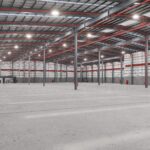
One of the most important design features in modern warehouses is clear height.
Warehouses with greater clear height allow businesses to:
- Install high pallet racking systems
- Use vertical storage effectively
- Increase storage capacity without expanding the building footprint
- Column Spacing
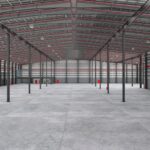
Column spacing significantly affects warehouse operations.
Wide column spacing allows:
- Efficient material-handling operations
- Flexible racking layouts
- Smooth forklift movement
- Floor Load Capacity
Modern industrial warehouse space for rent within Grade-A developments includes reinforced flooring capable of supporting:
- High-density storage
- Stacked goods
- Continuous forklift movement
- Loading Dock Infrastructure
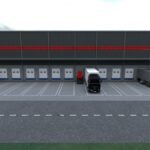
Efficient dock infrastructure is essential for high-performance warehouse logistics solutions.
Warehouses equipped with multiple dock doors and dock levellers allow trucks to:
- Load and unload quickly
- Reduce waiting time
- Improve distribution speed
- Mezzanine Spaces
Modern facilities offering warehousing as a service often include mezzanine spaces that can be used for:
- Office spaces
- Packing stations
- Light assembly operations
Compliance: What Businesses Must Verify Before Leasing
While infrastructure determines operational efficiency, regulatory compliance ensures warehouse operations remain safe and legally approved—especially in large-scale sustainable industrial development projects.
- Fire Safety Approvals
Warehouses must include:
- Hydrant networks
- Sprinkler systems
- Emergency exits
- Land-Use Zoning Approvals
Warehouses must be located in approved industrial zones, especially within planned industrial park development regions.
- Environmental Approvals
Facilities aligned with sustainable infrastructure development and green infrastructure development may require environmental clearances depending on usage.
- Structural Stability Certification
Critical for high-density and vertical storage environments.
- Electrical Safety and Power Infrastructure
Essential for:
- Automation systems
- Industrial equipment
- Temperature-controlled storage
Understanding the True Cost of Warehouse Leasing
When businesses search for warehouse storage space for rent or warehouse industrial space for rent, rental cost is only one part of the equation.
- Common Area Maintenance (CAM)
Supports shared infrastructure within organized developments offering sustainable industrial solutions.
- Security Deposits
Standard across most warehouses for lease agreements.
- Internal Infrastructure Fit-Out
Includes:
- Racking systems
- Automation
- Office setup
- Power Infrastructure Costs
Important for operations relying on high energy usage and advanced systems.
Why Location Still Matters?
The location of a warehouse plays a crucial role in supply chain efficiency, particularly within established hubs like Oragadam industrial park.
- Connectivity to Ports and Airports
Improves delivery timelines and reduces logistics costs.
- Labour Availability
Industrial corridors support access to skilled and semi-skilled labour, strengthening warehouse logistics solutions.
- Proximity to Industrial Ecosystems
Being close to suppliers and customers enhances operational efficiency within broader sustainable industrial development networks.
- Organized Industrial Parks
Modern developments offer:
- Better planning
- Compliance readiness
- Expansion flexibility
These ecosystems are often built with green technology for sustainable future principles in mind.
A Strategic Approach to Warehouse Selection
For businesses evaluating warehouse space for rent, warehouse for lease, or industrial space for rent, the decision extends far beyond square footage.
Key considerations include:
- Layout design and operational efficiency
- Regulatory approvals and compliance
- Long-term operating costs
Modern projects integrating EPC solutions, warehousing solutions, and sustainable industrial solutions are redefining how businesses approach logistics infrastructure.
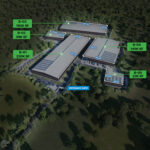
Projects such as OneAlpha Ventures’ Oragadam Industrial & Logistics Park, located within the Sriperumbudur–Oragadam corridor, are planned to support manufacturers and logistics operators through:
- Modular warehouse units
- Built-to-suit facilities
- Modern logistics infrastructure
These developments align with broader sustainable infrastructure development goals while enabling operational flexibility.
Companies that carefully evaluate these factors are far more likely to secure warehouses that strengthen their supply chain operations.
As India’s industrial ecosystem continues to expand, businesses increasingly require infrastructure aligned with green infrastructure development and long-term scalability.
At OneAlpha Ventures, this approach is central to how industrial and logistics spaces are developed.
Frequently Asked Questions
- What should businesses evaluate before leasing a warehouse?
Businesses should evaluate warehouse layout, clear height, floor load capacity, loading dock infrastructure, regulatory approvals and overall warehousing solutions efficiency.
- What is clear height in a warehouse and why does it matter?
Clear height impacts vertical storage and efficiency in industrial warehouse space for rent.
- What approvals should a warehouse have before leasing?
Fire safety, zoning permissions, structural certification and electrical safety compliance.
- What are the main cost factors when renting warehouse space?
Base rent, CAM, deposits, fit-outs and power costs when evaluating warehouse storage space for rent.
- Why do businesses prefer warehouses in organized industrial parks?
Because they offer better infrastructure, compliance and scalability within modern industrial park development ecosystems.